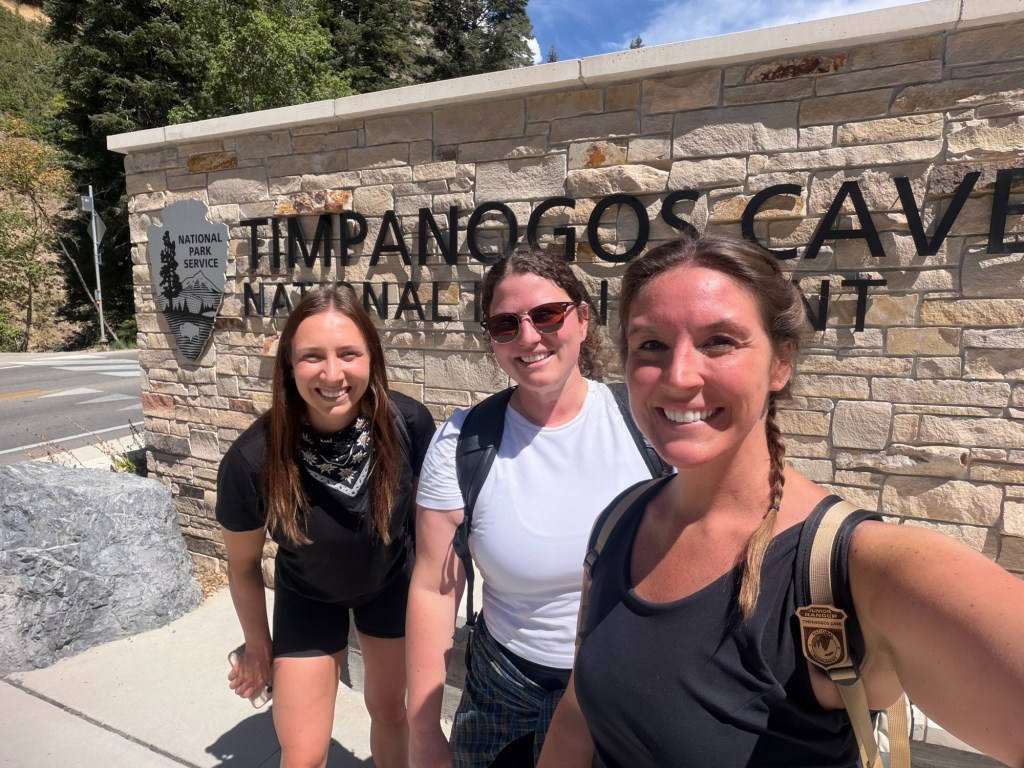
Over the weekend, my friends and I took a day trip from Denver to Salt Lake City. My friend, also named Hannah, had planned a day around exploring Timpanogos Cave National Monument. I had never been, despite living in Salt Lake City for a month back in 2022, so I was excited to check it out.
Hannah is the queen of one-day fly-in, fly-out adventures. She looks for cheap (read: $20-$60) roundtrip flights to a city, with the first flight leaving absurdly early and the return flight leaving absurdly late. Then she jam-packs the day with as much adventure as humanly possible.
Seven-plus years ago, when she first told me she did this, I wanted no part of it. Being awake for more than twenty hours for a day trip did not sound appealing. Somehow, I’ve since become a happy participant.
Hannah handles every detail: flights, rental car, itinerary, breakfast for the plane, snacks for the day, and even sits in online queues for tickets to the activities we want to do.
The only thing I do is pack my daypack and show up at the airport at the time listed on the boarding pass she sends me. I truly feel so lucky and grateful for our friendship.
Timpanogos Cave National Monument
We landed in Salt Lake City at 7 a.m. After picking up our rental car, we made our way to one of my favorite coffee shops in Salt Lake, Culture Coffee, for some caffeine before heading toward Timpanogos.

Timpanogos Cave National Monument is home to three interconnected caves: Hansen, Middle, and Timpanogos. Inside, there is a lit pathway and man made tunnels connecting the three caves, along with a fascinating history shared throughout the tour.
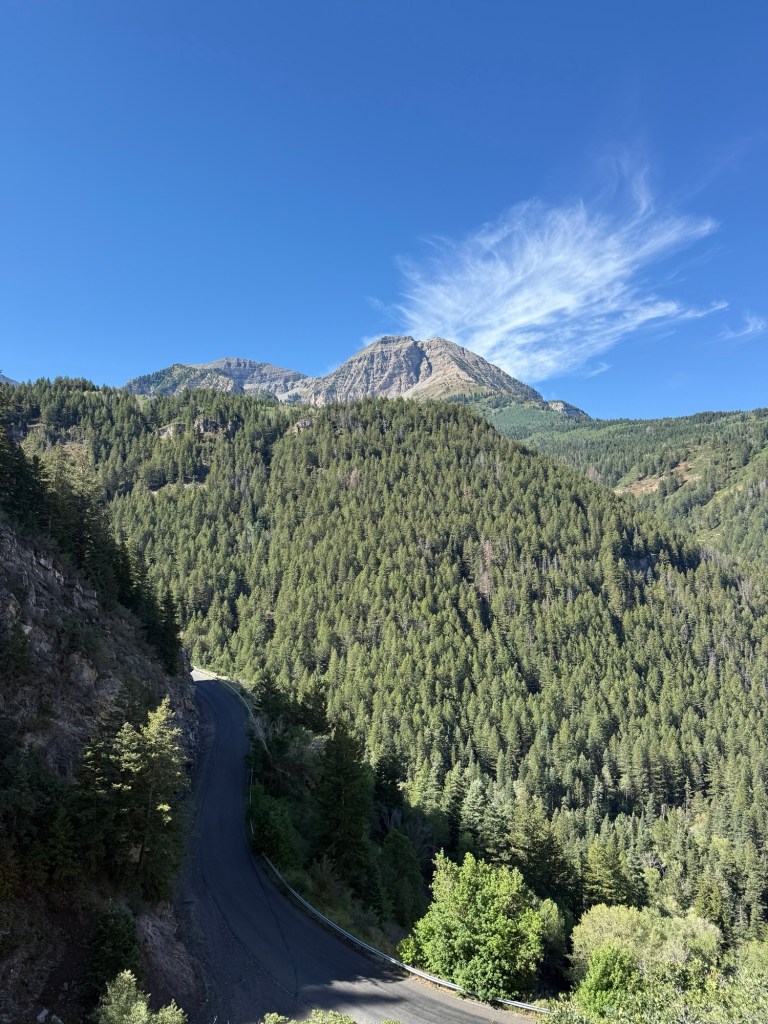
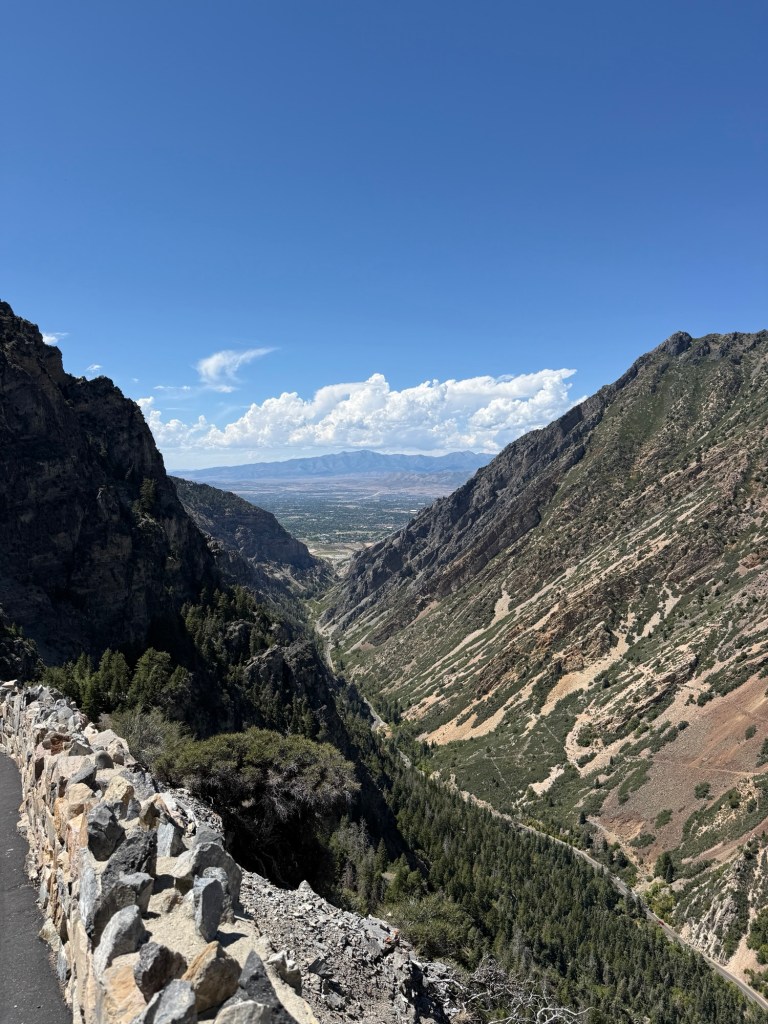
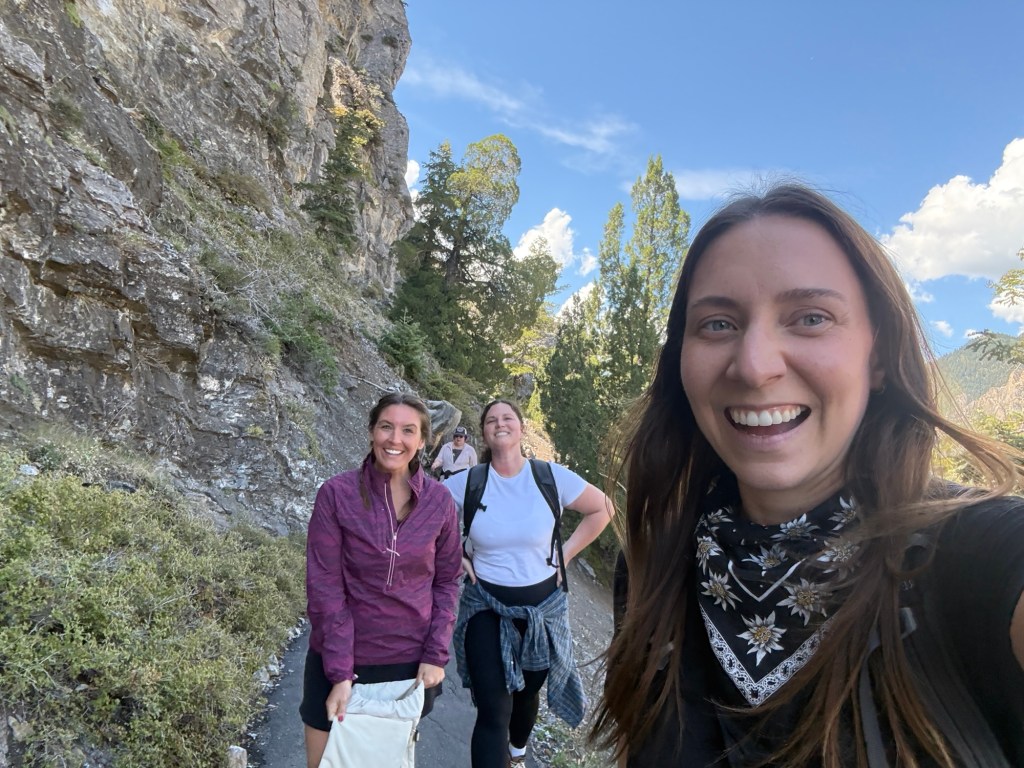
Hannah had booked us tickets for the 12:45 p.m. tour, so we had a little time to explore before the main event. We did a short hike in the national monument before making our way to the visitor center to start the trail toward the cave entrance.
The 1.5 mile trail is paved the entire way, but it climbs 1,100 feet, and Utah is having a summer of heat and dryness much like Denver. In 90 degree temperatures, we were thoroughly sweaty by the time we reached the cave. We stopped for some water and snacks before heading inside.
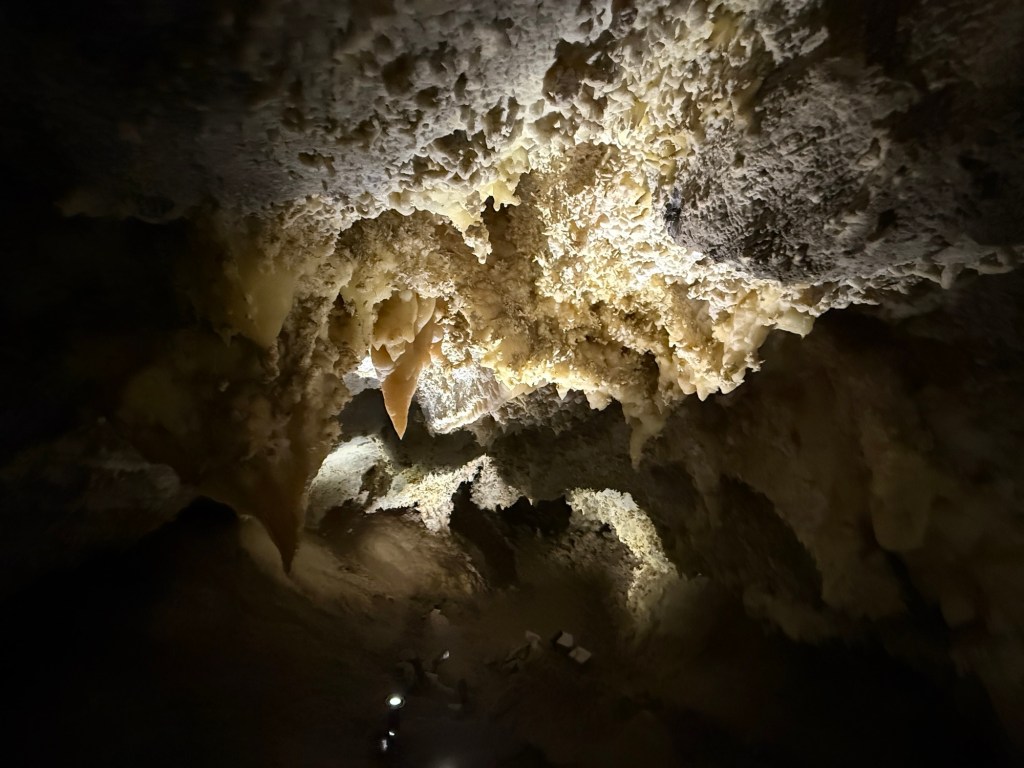
I hadn’t Googled the caves beforehand, so I had no idea what to expect. The moment we walked inside, we were hit with the cave’s refreshing 45 degree temperature, saw a bat, and throughout the tour were surrounded by stalactites, stalagmites, and colorful mineral formations dripping from nearly every wall. It felt like stepping into a completely different world.
A Little History on the Caves
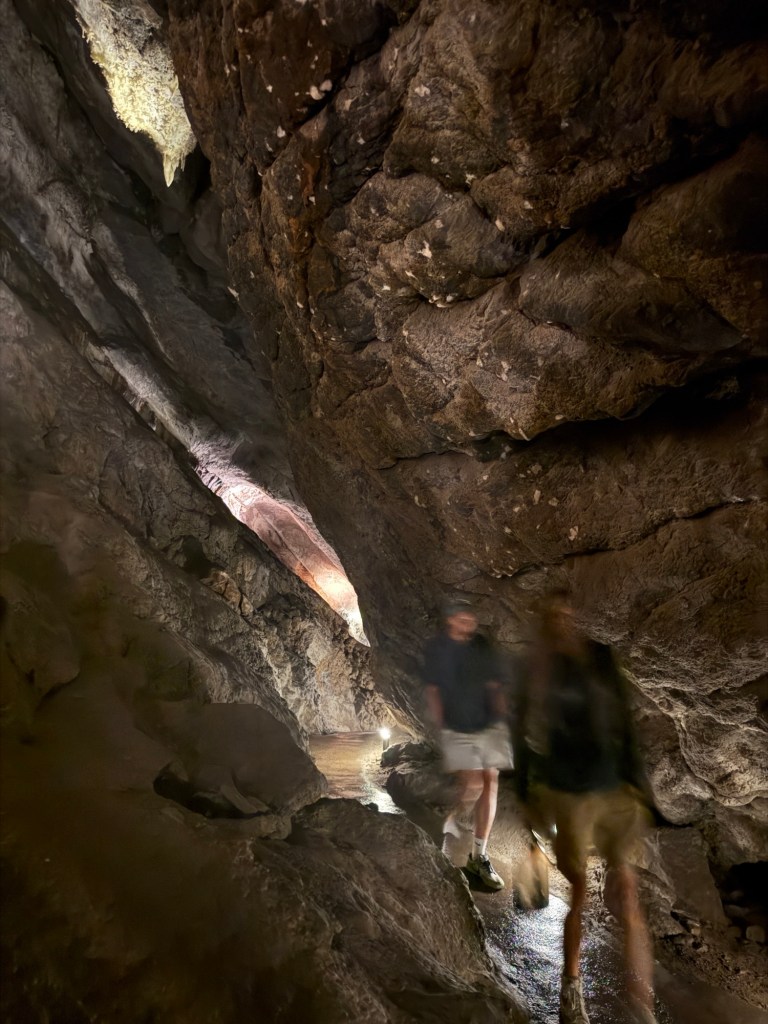
We continued the tour, squeezing ourselves through narrow passageways, ducking under low ceilings, and at one point experiencing total darkness. Our guide explained the caves formed over millions of years as slightly acidic water dissolved limestone along three fault lines in the earth. One of those fault lines is clearly visible inside the cave.
The first cave we entered, Hansen Cave, was discovered in 1887 by a local logger named Martin Hansen, who followed mountain lion tracks in the snow that brought him to the cave’s natural entrance. Shortly after, the Hansen family began offering cave tours.
Unfortunately, the cave was also opened to souvenir hunters and miners, who extracted the colorful flowstone and other formations. Within just a few years, much of the cave’s most impressive material had been removed.
Today, Hansen Cave looks very different from the other two. It’s essentially a dark cave with rock walls and boulders scattered throughout. Frankly, not particularly impressive which makes what happened to it all the more striking.
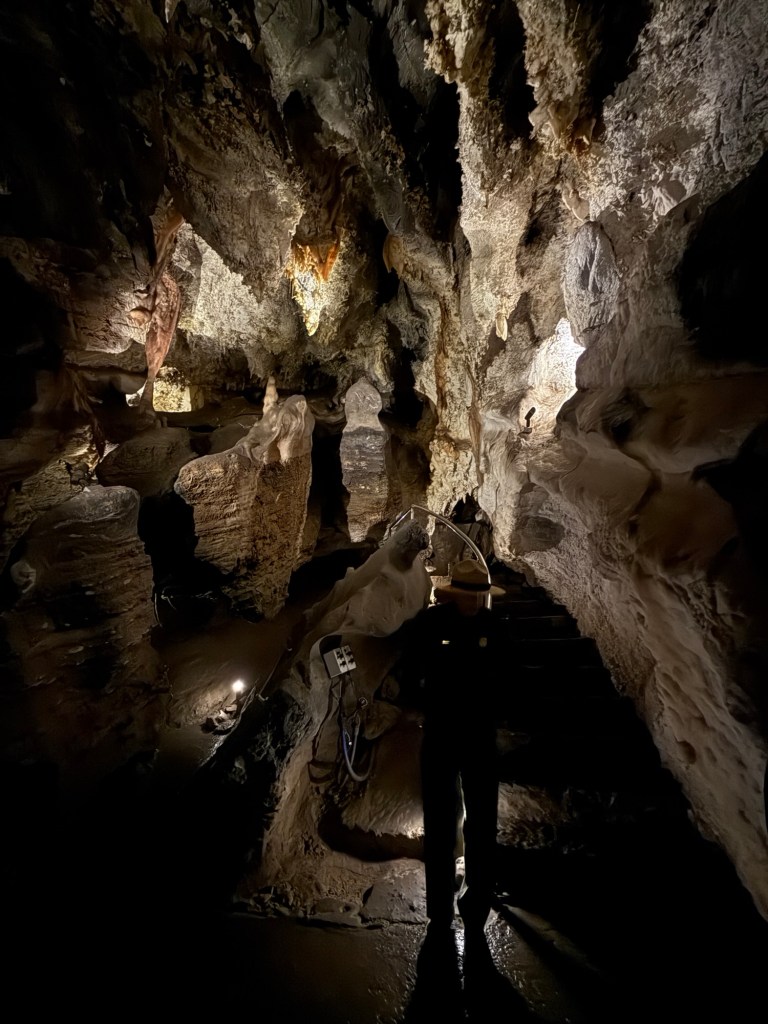
Timpanogos Cave was discovered in 1915 by two teenagers, James W. Gough and Frank Johnson, while they were out exploring. From what I understood, the Johnson family subsequently claimed mining rights to the cave, but before they could begin mining, they had to leave the area to take care of some things out of state. When they returned, they couldn’t relocate the cave’s natural entrance. The cave was lost for six years.
In August 1921, Vearl J. Manwill rediscovered the cave when he noticed rocks that looked as though they had been hand placed rather than naturally occurring. After seeing what had happened to Hansen Cave, Manwill and others committed to preserving Timpanogos.
Middle Cave, a vertical cave, was discovered by the Hansen family shortly after Timpanogos Cave was rediscovered. Martin Hansen was in his 70s at the time. To access the cave, they used a 60 foot rope and then free-soloed another section down to the cave floor, roughly 110 feet below the natural entrance. I can’t imagine being in my 70s and deciding that was a reasonable afternoon activity.
In 1922, at the urging of Utah citizens and the U.S. Forest Service, President Warren G. Harding established the caves as Timpanogos Cave National Monument. The designation helped protect Timpanogos and Middle Caves from a fate similar to Hansen Cave.
The National Park Service continued leading tours of the caves but shortly after, the NPS was sued by people who held mining rights to the land. The NPS was making money from cave tours while those with mining rights were prohibited from extracting minerals.
The case ultimately required proving that mining in and around the caves would not produce the minerals the rights holders were seeking. Once that was established, the mining rights were removed.
Today, more than 600 people can tour the caves each day during the spring, summer, and fall. There are precautions in place to help protect the caves. Visitors aren’t allowed to touch anything inside, doors help maintain the caves’ temperature and limit airflow, and scientists monitor the caves’ health and development.
The Cost of Protecting Beautiful Places
Touring Timpanogos Cave made me think about how many beautiful natural places humans have decimated for profit or because we didn’t understand their value until it was too late.
It made me ponder the tradeoffs involved in protecting these places.
To visit Timpanogos Cave, you have to pay for a guided tour which frequently sell out meaning access is limited and paid for. On one hand, that can feel frustrating when you want to explore somewhere beautiful. On the other, there probably wouldn’t be a beautiful cave left to explore without those protections.
It’s a complicated balance as preserving a place often means limiting our access to it. Many hours could be spent discussing that tension.
I equally thought about how many undiscovered caves might still be sitting beneath mountains and underground, completely untouched by humans. Places where mineral formations are continuing to slowly grow and ecosystems are evolving without us ever knowing they’re there. There’s something comforting about that thought.
For now, I’m grateful that these caves are protected, that we get to experience them, and that generations after us will hopefully get the same opportunity.
Back to the City
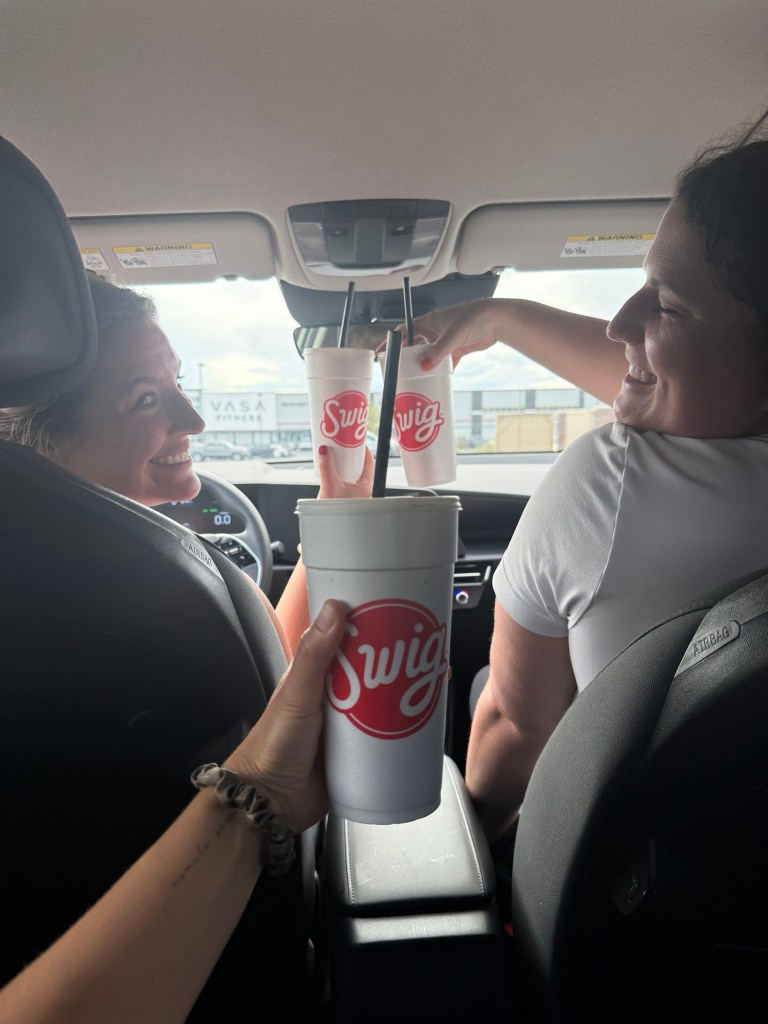
After our tour, we still had a few hours left before our flight. We headed back down the mountain and stopped at a Swig for a classic Utah dirty soda which is soda with various flavors and cream added in. I got a Diet Coke with coconut, lime, and cream.
We had dinner at a delicious hand-roll spot, HandoSake Sushi, then walked over to Rockwell Ice Cream for a sweet treat before heading back to the airport.

Our flight was delayed an hour due to weather in Denver, but once we boarded, it was smooth sailing home. I walked through my front door at 11 p.m., exhausted and with a full heart.
There’s something special about squeezing an entire adventure into one day. You get the excitement of going somewhere new without needing to take time off work or pack an overnight bag. And when the person planning it is a friend who knows exactly how to extract the most fun out of each hour, it’s even better.
Seven plus years ago, I couldn’t imagine voluntarily staying awake for more than twenty hours to spend a single day in another city. Now they’re trips I look forward to.
Until the next tale… Happy trails.
-Hannah


Looks like so much fun and great history behind it!
LikeLiked by 1 person
I love you, mom!
LikeLike
I LOVE planning trips for us. You are the best friend, adventure partner, and true sunshine in human form. Thank you for our memories throughout the years!
LikeLiked by 1 person
I love you so much, Han! Thank you for always adding adventure to my life 🙂
LikeLike