
Back in April, after reading a magazine article, I decided I was going to solo hike across Switzerland. Dramatic, I know. I told my family and friends, set my sights on an early September departure, and then… promptly did nothing.
By the time August rolled around, I had done little research. Three weeks before my “official” (read: verbally committed) departure date, I finally glued myself to the couch for eight hours, booked a flight, and mapped out an eleven day trip.
Here’s what I learned about planning a hike across Switzerland so that your trip planning might go just a bit smoother than mine.
Why the Via Alpina? A Little Help From Friends
I briefly researched trekking routes in Switzerland back in April and was instantly overwhelmed, there were so many options. It felt like the entire country was one giant web of interconnected trails (which, I later learned, is completely true). I had no idea how to narrow it down or choose just one… so, naturally, I stopped researching altogether.
Trip Planning Advice: Dream Out Loud (Doubles as life advice!)
In June, while chatting with a coworker about my Switzerland plans, he mentioned he had a friend who used to live there and could offer some advice. I met his friend for coffee and went over a few route options. He hadn’t hiked the routes, but he pointed me toward a great Swiss trek planning resource and reached out to his friend who had completed part of a trek there the previous summer. With their guidance, I decided that hiking a section of the Via Alpina was the way to go.
The Via Alpina consists of twenty stages that wind through the northern Alps of Switzerland. Completing all of them takes you clear across the country, from Austria to France or vice versa. The trek can be done in three to five weeks, depending on your pace and how many non-hiking (“zero”) days you take.
Most stages begin and end in towns, making it convenient to complete one stage per day and sleep comfortably each night. If you’d rather break a stage into smaller sections, there are mountain huts along the route where you can stay overnight. And if you need a break, or if the weather turns, Switzerland’s train and bus systems can take you to the next town. Because of this accessibility, booking accommodations in advance is a safe bet as there is a way, whether by trail or rail, to get to the start of the next trek stage.


Fast Forward to August: Rapid Planning & Booking
By August, I still hadn’t chosen which stages of the Via Alpina I wanted to hike. I hadn’t researched the terrain, daily mileage, weather, accommodations, or even my potential travel dates. With so much planning and booking still ahead of me, I started compiling excuses for why the trip wasn’t feasible this year: not enough time off work, hotels and huts would be booked, high costs, potential for bad weather, the risks of trekking alone in a foreign country… the list went on. Staying home and exploring my local Colorado trails felt so much easier than diving into the unknown logistics, and discomfort, of a solo trek in Switzerland.
But there’s power in sharing your dreams and goals out loud. It creates unexpected connections with people who can help, and it builds a quiet sense of accountability to follow through. More than that, I’ve learned I like to keep the promises I make to myself which is how I ended up glued to my couch for eight straight hours of trip planning three weeks before departure.
One Sunday in August, I finally sat down and decided to see if I could make it work. I checked my calendar and carved out eleven days at the end of the month (I’d hoped for sixteen, but close enough) and I booked my flight.
From there, the plan came together fast. I picked stages 10 through 15 of the Via Alpina, mostly by scrolling through photos and choosing the ones that looked most exciting. I committed to one stage per day to cover as much ground as possible, pre-booked hotels in each town, and built an Excel sheet mapping my route: daily mileage, elevation gain, towns, lodging, and alternative transportation options to build a “bailout” plan for peace of mind. I added one seemingly random “zero day” (the second day of the trek) with no hiking planned because I read on other blogs those were needed. Little did I know, this planned zero day would save my trip.
Within 48 hours, the trip was fully booked. Over the next two weeks, I pieced together a packing list as items came to mind. The night before my flight, I packed a backpack I had borrowed from a friend, trying to keep it as light as possible and the next morning, I was on my way to the airport, ready or not.
The Research I Didn’t Do
My eight-hour “research” session did not include the following (pretty) important details:
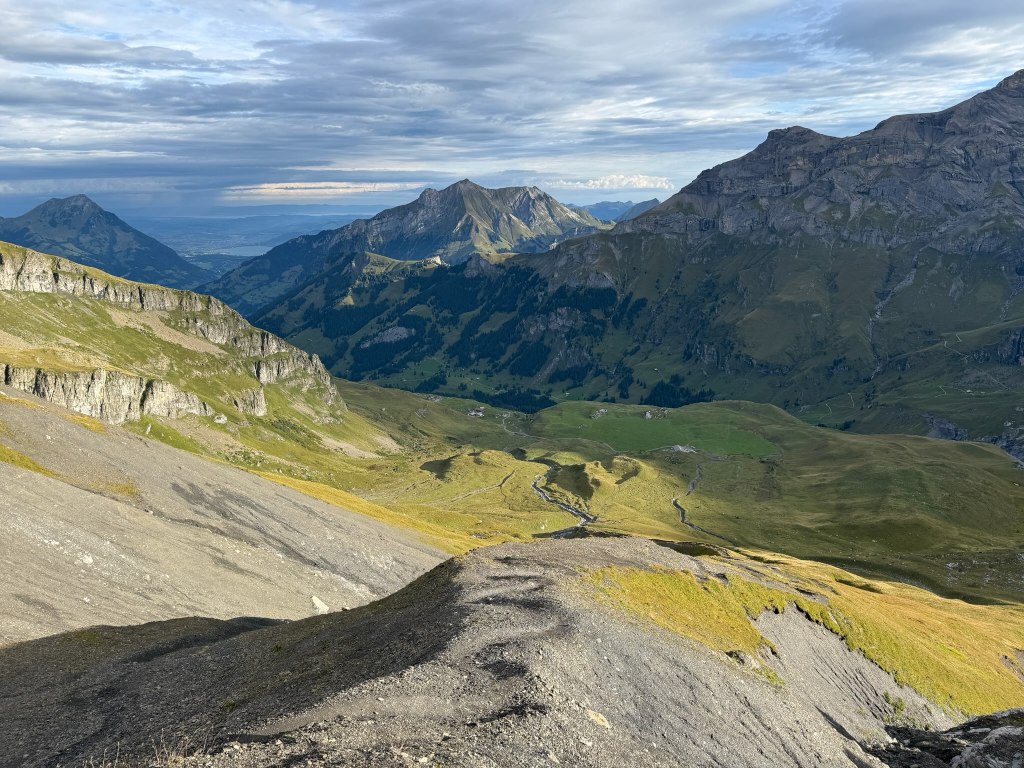
- Terrain: I didn’t look into the type of terrain I’d be hiking. I noted the daily mileage and elevation gain but it didn’t occur to me that I’d be crossing rocky, high mountain passes each day. This is important to know!
- Weather: I had no real understanding of Swiss mountain weather. I knew storms could roll in quickly (like in Colorado), but with my longer trekking days and later starts, I broke my personal “below tree line by noon” rule. I didn’t bring traction for my shoes, hoping to avoid snow, though if I’d gone past mid-September, I would’ve packed it along. I underestimated how hard it can rain in Switzerland. Next time, I’d bring a full rain kit and a backpack cover.
- Training: By mid-August, I’m usually in my best hiking shape but I didn’t train with a loaded pack. I clearly thought I’d summon some kind of “Superwoman strength” once I landed in Switzerland. The mileage and elevation gain looked fine from the comfort of my couch, but the reality on my first trekking day was humbling. Also a friendly reminder: the gain you climb up, is the descent you have to come down so the quads will be working!
- Time Difference: It never occurred to me that trekking all day in Switzerland meant I’d effectively be hiking through the night in U.S. time. My body was especially fatigued on the first trekking day until I acclimated.

Planning Resources + Apps to Download Before You Go
Five days before I left, I connected with a coworker who lives in Switzerland. He told me that Switzerland is an incredibly tech-forward country- there’s an app for everything. He wasn’t kidding.
Here’s a list of apps (that I wish I’d known about sooner!) that ended up saving me time, stress, and a few wrong turns. I used each of these daily during my trek:
- SwitzerlandMobility: Switzerland’s official trail app- like AllTrails, but dare I say, better. It’s the ultimate resource for planning and navigating the Via Alpina. You’ll find up-to-date trail maps, detailed route descriptions, and current information on trail conditions, closures, and reroutes. It also highlights huts to stay in and gondolas or public transit options if you want to shorten a stage. If I could give this app fifteen stars, I would.
- SBB Mobile: Switzerland’s public transportation app. Swiss trains, buses, and gondolas are famously clean, efficient, and always on time. This app shows every available route and schedule, making it easy to get wherever you need to go.
- Tip: I recommend getting the Swiss Half Fare Card for tourists. It works on trains, buses, and gondolas, and it paid for itself and more by the end of my trip.
- MeteoSwiss: Switzerland weather app. The best resource for accurate, hyper-local weather forecasts. It was especially helpful for checking mountain pass conditions and potential storms so I knew when I needed to be down from the mountain each day.
- Ubigi: This is the e-sim I used for my phone plan in Switzerland. The coverage was great, the various data plans were reasonably priced and the e-sim was easy to install.


Gear Highlight: The Only Socks I’ll Ever Pack Again
I had one packing worry and it was… socks. Specifically, how many pairs of hiking socks I thought I had to bring to keep my feet clean and dry (a non-negotiable for long days on the trail!). Bringing nine pairs of trail socks takes up more room than one would think.
The weekend before I left, I randomly met one of the co-founders of Hollow Socks at a coffee shop. I told him about my upcoming trek and my sock packing concerns, and he handed me two pairs of their alpaca wool socks to try. He promised that, thanks to their antimicrobial and quick-drying properties, they were the only pairs I’d need.
I decided to trust him. I wore the first pair for seven days straight (no washing!) before switching to the second. Each morning, pulling them on felt oddly comforting, like my feet were protected, supported, and ready for whatever lay ahead. Who knew socks could do that? They carried me through every mile, and now they’re the only hiking socks I wear.
Packing List
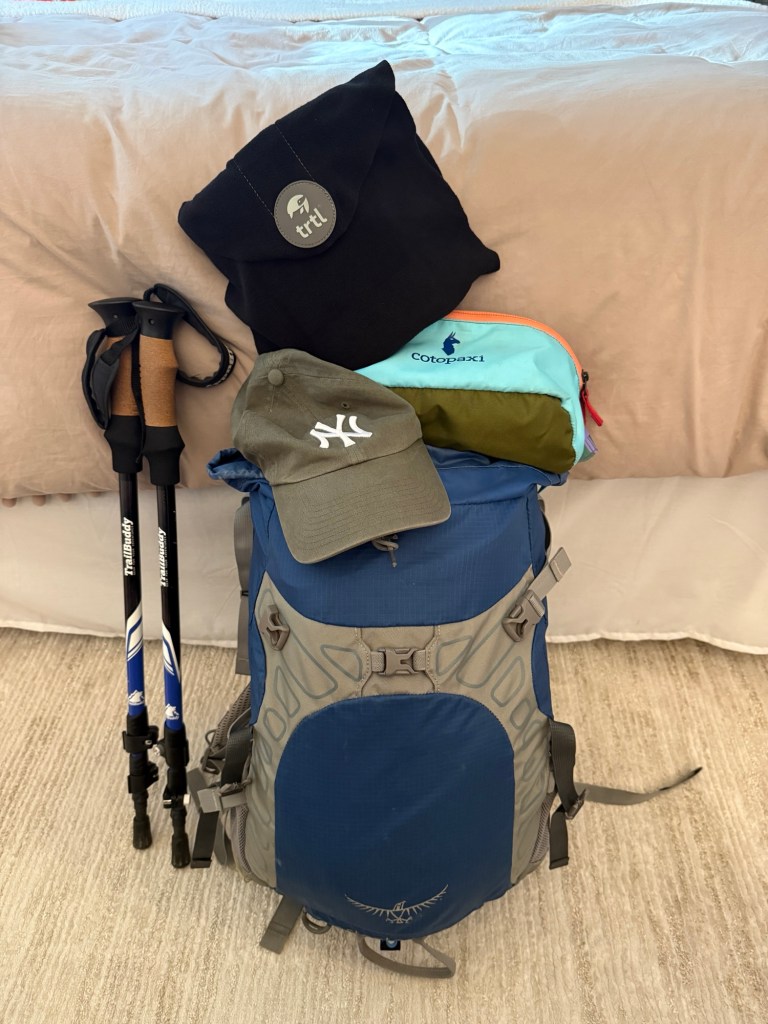
Here’s everything I packed for my 11 days in Switzerland. If I did it again, I’d add rain pants, a backpack rain cover or poncho, and sunscreen but otherwise, I’d pack exactly the same for a summer trip. My priorities were function, comfort, and keeping my pack as light as possible. Everything was organized into packing cubes for easy access and I hand washed items along the way (hence- the laundry powder!).
Travel Essentials:
- Airplane pillow: Totally optional, but I love an airplane pillow! I bought this one so it was easier to pack down and carry with me.
- Passport, credit card, debit card: I used my debit card to withdraw Swiss Francs from ATMs- I do this in every foreign country. You’ll usually just pay a small out-of-network fee and get the best conversion rate (make sure you click the countries local currency, not USD). Cash is handy for buying produce or snacks from the self-serve farm stands you’ll pass along the trails.
Gear:
- Backpack + fanny pack
- Hiking poles: Make sure they have rubber tips so you can take them through airport security.
- Headlamp
- Emergency blanket
- Small first aid kit & moleskin
- Medications: Advil, Benadryl, DayQuil, magnesium
- Portable power bank + chargers + travel plug adapter
- Hiking watch
- Hat
- Lightweight camping towel (perfect for lake dips!)
Clothing:
- 4 merino wool shirts: 2 long-sleeve, 2 short-sleeve
- 2 pairs of leggings
- 1 pair of shorts
- 1 hiking mid-layer
- 1 rain jacket
- 1 puffy vest
- 1 pair of gloves
- 1 pair of trail shoes
- 1 pair of Teva sandals
- 3 sports bras
- 2 pairs of socks (Hollow Socks, of course)
- Underwear
Trail and Snack Essentials:
- Granola bars
- Gum
- LMNT packets (for hydration)
- 2 collapsible water bottles
- 1 water filter
Toiletries & Extras:
- Basic toiletries
- Ear plugs: Great for mountain huts or hotels with thin walls.
- Laundry powder
- Kindle
- Journal + pen
That’s it for my planning resources and packing list! In Part 2, I’ll share how it all went, the itinerary I followed, what worked, what didn’t, and about the amazing people I met along the way.
Until the next tale… Happy trails.
-Hannah

 Tales of My Trails
I am insanely proud of you. You inspire us ALL to be more adventurous and to lean into life’s challenges. I’m lucky to know and love you!
LikeLiked by 1 person
I love you Han! Thank you for your unending support (on this trip & in life!)
LikeLike
Very cool! Beautiful pics. Looking forward to more!
LikeLiked by 1 person
Thank you for reading, Rick!
LikeLike
Way to go my lovely Daughter! Fabulous trip description, planning process, items to have (hopefully the product sellers you’re endorsing are appreciative), and a very useful guide for like-minded travelers. Very proud of you always. Love, Dad!
LikeLiked by 1 person
Thank you for reading and supporting me always, Dad! I love you!
LikeLike